How to Verify Tree Service Insurance & Worker's Comp in North Carolina
Tree care is one of the most hazardous trades in the country. If an uninsured tree worker is injured on your property, you could be held liable. Here is how to verify genuine insurance coverage in North Carolina.
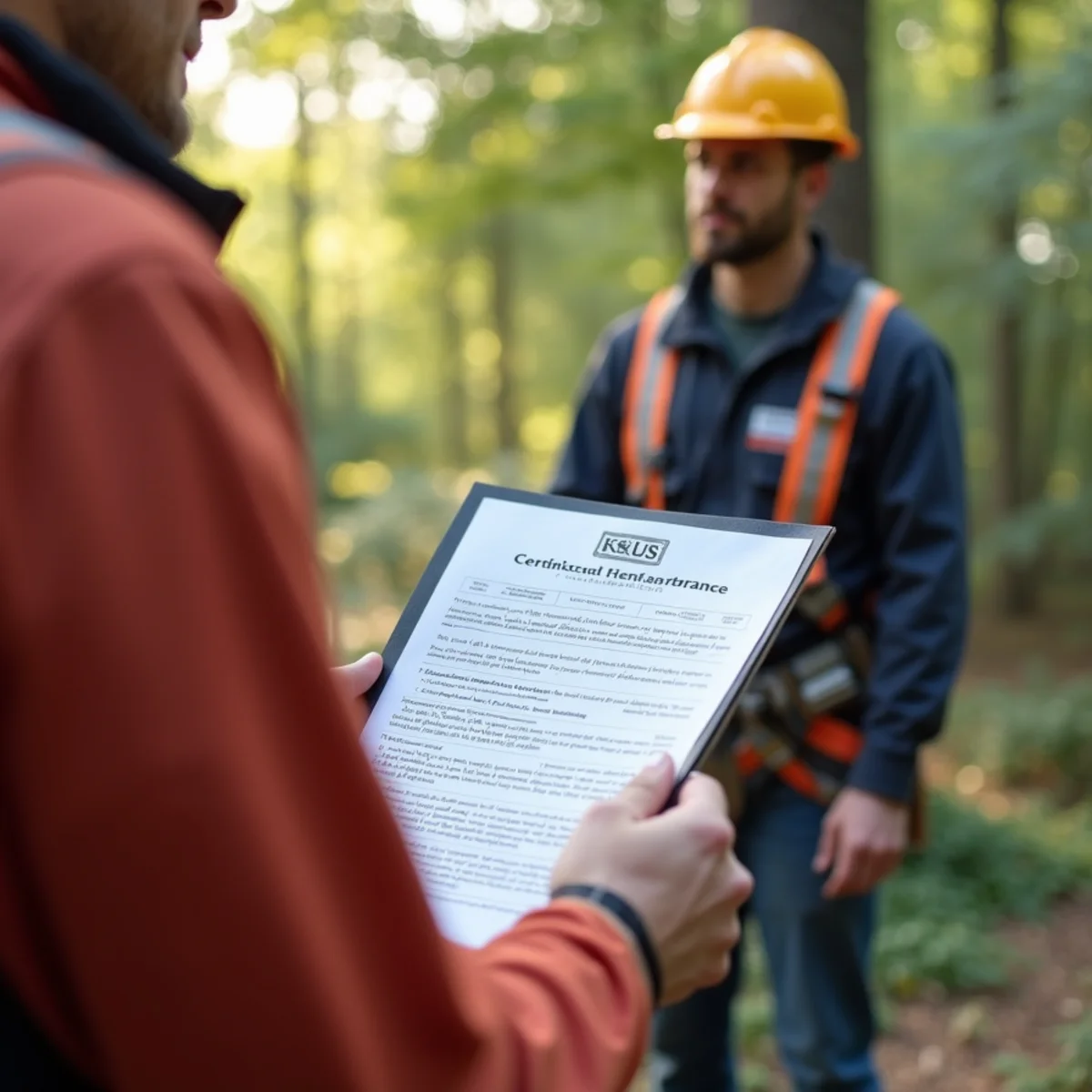
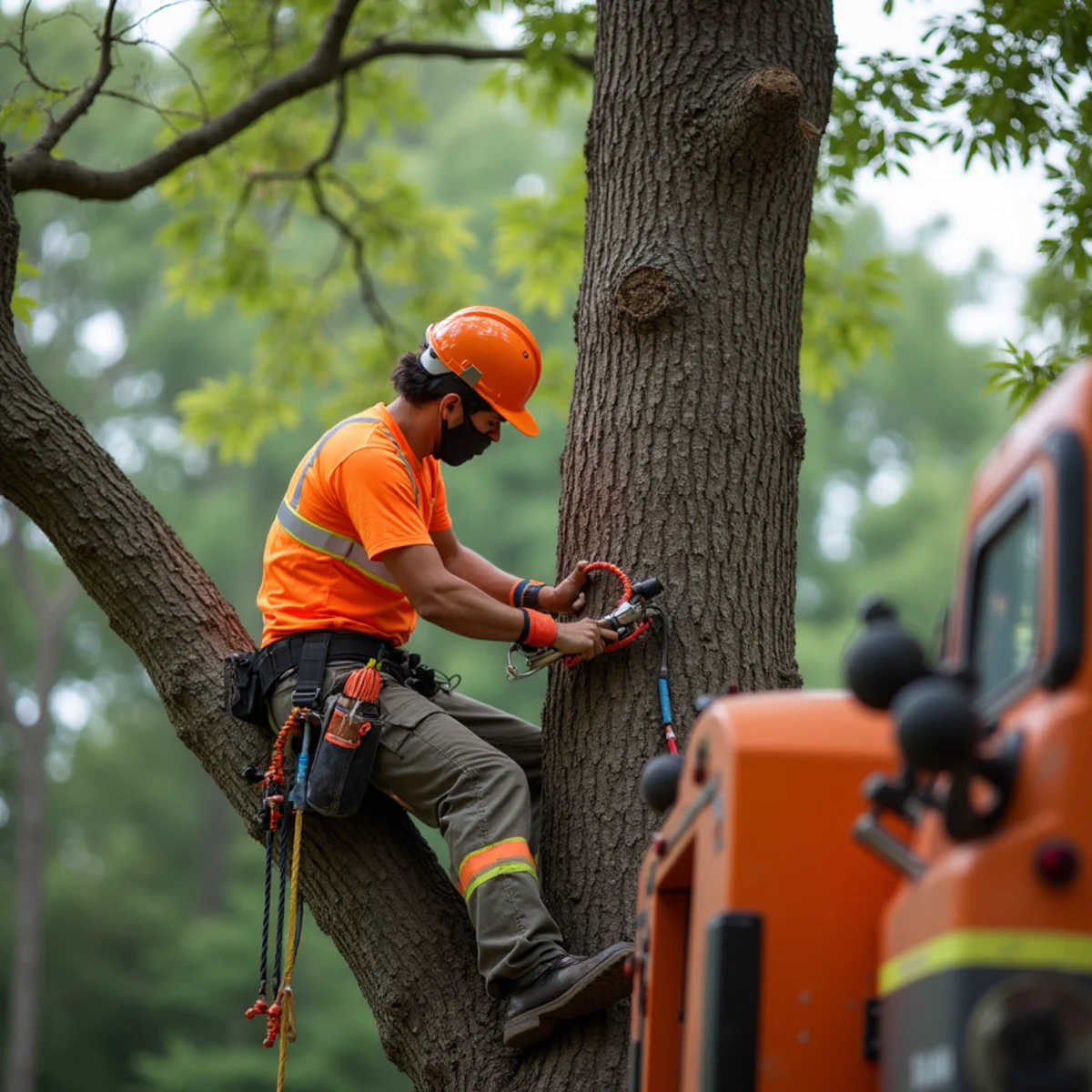
Tree care is statistically ranked by the U.S. Bureau of Labor Statistics as one of the most hazardous occupations in America. Arborists work with high-speed chainsaws, maneuver in 70-foot canopies, rig multi-ton wooden trunks over residential roofs, and operate around high-voltage power lines. When an operation goes smoothly, skilled professionals make tree removal look effortless. But when an accident occurs, the physical and financial consequences are immense.
What shocks most property owners in Concord, Harrisburg, and Kannapolis is that the State of North Carolina does not require a state license to operate a commercial tree service. Anyone with a chainsaw, an axe, and a used pickup truck can legally print business cards and advertise themselves as a 'tree expert.'
This lack of state licensing makes it the homeowner's personal responsibility to verify that any contractor stepping onto their lawn carries genuine, active insurance coverage.
---
The Big Trap: General Liability vs. Workers' Compensation
When homeowners ask a tree company, 'Are you licensed and insured?', almost every contractor answers with an immediate 'Yes.'
However, many property owners do not realize that there are two completely different categories of commercial insurance, and you need absolute confirmation of both:
1. Commercial General Liability Insurance ($1,000,000 to $2,000,000 Minimum): - What It Covers: Damage caused by the contractor to your home, your structures, your vehicles, or your neighbor's property. For example, if a 4,000-pound oak trunk is dropped through your roof or crushes your air conditioning condenser, General Liability pays for the structural reconstruction. - What It Does NOT Cover: It pays zero dollars for medical bills, trauma care, or disability if a tree worker falls from a tree, suffers a chainsaw laceration, or is struck by a falling limb on your property. 2. Workers' Compensation Insurance (The Critical Shield): - What It Covers: Direct medical expenses, hospitalization, surgical reconstruction, rehabilitation, and lost wage compensation for employees injured while performing work on your job site.
#
The Homeowner Premises Liability Nightmare
Under North Carolina common law and premises liability statutes, if you hire an uninsured or under-insured tree contractor, the workers on your property may be legally classified as statutory employees or business invitees.If an uninsured climber falls 40 feet onto your driveway and suffers catastrophic injuries, their medical bills can easily exceed $300,000 to $750,000. Because the tree company has no workers' compensation insurance, the injured worker's personal injury attorneys will file suit directly against you, the property owner. Your personal homeowners insurance carrier may fight the claim, dispute coverage, or cancel your policy, leaving your personal assets and home equity exposed.
---
North Carolina Workers' Comp Laws: The 3-Employee Rule & Ghost Policies
Under the North Carolina Workers' Compensation Act (N.C.G.S. § 97-2), every employer that regularly employs three or more employees is legally mandated to purchase and maintain workers' compensation insurance.
However, unscrupulous tree operators exploit several legal loopholes that place homeowners at risk:
- The 'Independent Subcontractor' Myth: Disreputable operators frequently tell homeowners, 'I don't need workers' comp because all my crew guys are independent 1099 subcontractors.' In North Carolina courts and before the Industrial Commission, this argument routinely fails. If the contractor provides the equipment, directs the work, and sets the schedule, those workers are legal employees. - The 'Ghost Policy' Scam: In tree care, genuine workers' compensation insurance is expensive—often costing $25 to $40 for every $100 of payroll due to high trade risk. To cut costs, some operators purchase a bare-minimum 'ghost policy' (an owner-only policy with zero employees covered) simply to obtain a certificate sheet to show homeowners, while employing an unlisted, uninsured ground crew.
---
The 4-Step Certificate of Insurance (COI) Verification Protocol
Never accept a photocopied paper certificate handed to you out of a truck glovebox; fraudulent certificates are easily created on home printers. Follow this bulletproof 4-step protocol:
| Verification Step | Homeowner Action Required | Why It Matters | |---|---|---| | 1. Direct Agency Dispatch | Require the contractor's insurance broker to email the COI directly to your personal email address. | Prevents tampered, photoshopped, or expired paper certificates. | | 2. Named Insured Audit | Check that the legal business name on the certificate matches the proposal and company payment account. | Ensures the certificate does not belong to a different parent entity or subcontractor. | | 3. Policy Classification Code | Verify that operations are classified under Tree Pruning / Tree Removal (Code 0106). | Dishonest operators often carry cheaper insurance classified as 'Lawn Mowing' or 'Landscape Gardening,' which specifically excludes tree cutting over 10 feet. | | 4. Direct Underwriter Phone Verification | Call the independent insurance agency listed in the upper corner of the COI. Ask: 'Is this policy active, paid up to date, and does it include Workers' Comp for all crew members?' | Confirms the policy was not cancelled for non-payment two weeks after the certificate was printed. |
---
5 Critical Red Flags of Uninsured 'Fly-by-Night' Tree Contractors
Following severe thunderstorms or hurricanes in Cabarrus County, out-of-town operators flood neighborhoods in unmarked pickup trucks offering cheap tree cutting. Watch for these five warning signs:
1. Door-to-Door Solicitation Demanding Cash Upfront: Legitimate, established local tree companies never demand large cash advances or door-to-door canvassing before equipment arrives. 2. No Commercial Markings or Physical Address: The truck has magnetic temporary signs or no signage at all, and their invoice lists only a mobile phone number without a verifiable local shop address in Cabarrus or Mecklenburg County. 3. Refusal to Provide an Insurance Broker Contact: If the contractor acts offended or defensive when you ask for their insurance agent's contact details, immediately dismiss them. 4. Bizarrely Low Pricing: If two reputable local companies quote $2,200 for a difficult crane oak removal and a transient contractor quotes $800, that price difference is almost always achieved by skipping workers' compensation insurance and safety rigging. 5. No Personal Protective Equipment (PPE): Crew members operating chainsaws without helmets, eye protection, ear protection, and Kevlar chainsaw chaps indicate a company that ignores OSHA safety standards.
At Cabarrus Tree Crew, our core standard is absolute homeowner peace of mind: every tree crew we dispatch is licensed where North Carolina requires it, and carries comprehensive Commercial General Liability and full Workers' Compensation coverage. Call us at (321) 478-0689 for dependable, fully protected tree care.
Field Evidence & Visual Guide
Reference photographs illustrating the key stages, biological indicators, and field equipment discussed in this article.

Need Help With a Dangerous or Fallen Tree?
Call Cabarrus Tree Crew at (321) 478-0689. Our insured local teams answer 24 hours a day, 7 days a week.
Frequently Asked Questions
Can a homeowner be listed as an 'additional insured' on the tree company's policy?▾
Does the State of North Carolina license tree services or arborists?▾
What should I do if an uninsured tree contractor damages my driveway or fence?▾
Why is tree service workers' compensation insurance so expensive?▾
Request an On-Site Tree Estimate
For immediate emergencies (tree on house, car, or blocked road), please call directly for fastest dispatch.