My Neighbor's Tree Fell in My Yard: Who Pays in North Carolina?
When a neighbor's tree topples across your fence line, driveway, or roof during a storm, assigning financial responsibility can be confusing. Here is how North Carolina common law, the Act of God doctrine, and property insurance handle boundary tree damage.
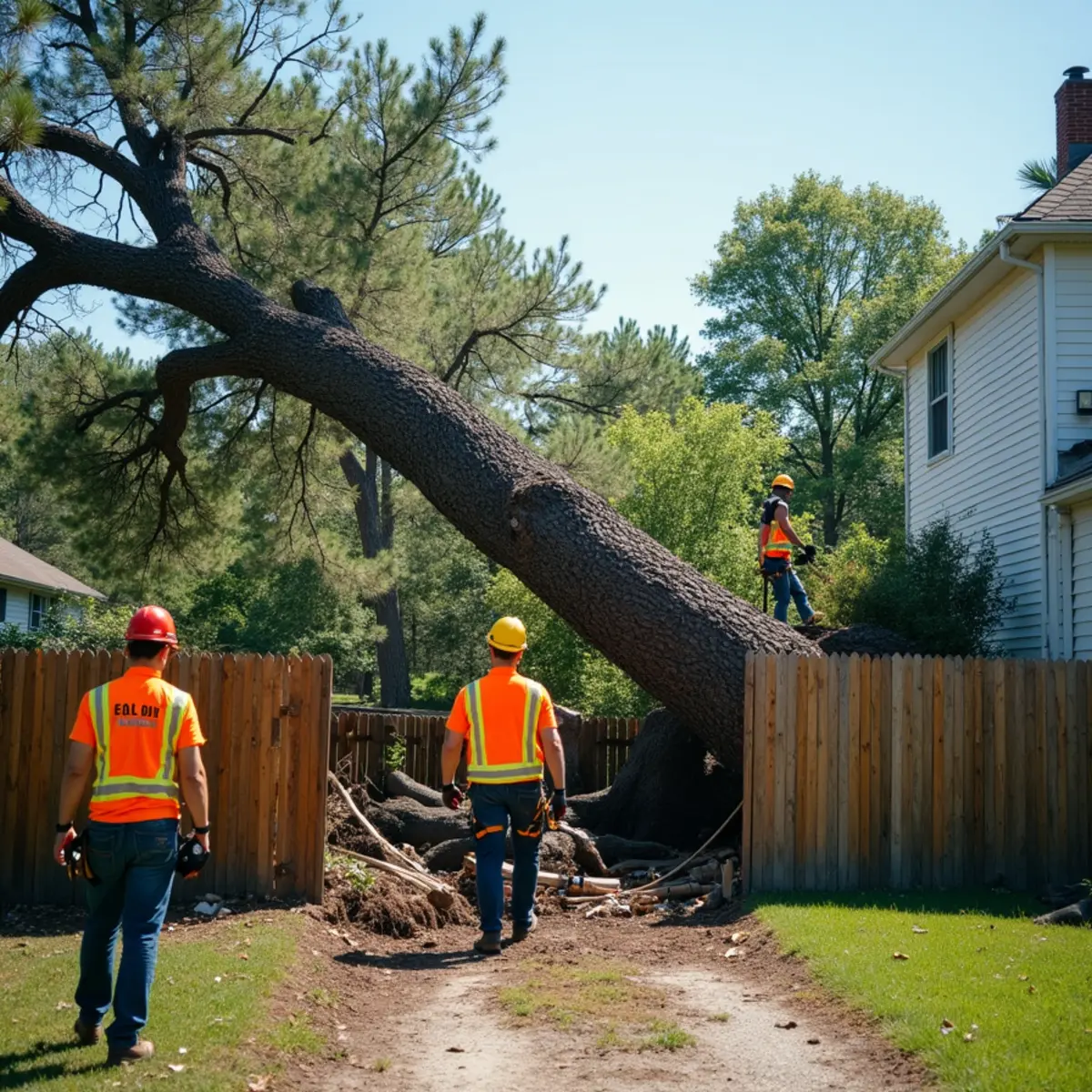
Severe weather events across Cabarrus County—from sudden summer microbursts in Mint Hill to freezing winter ice accumulation in Concord and Kannapolis—regularly send mature hardwoods crashing across property lines. When an eighty-foot oak rooted on your neighbor's parcel crushes your privacy fence, blocks your driveway, or punctures your master bedroom roof, emotions run high. Property owners instinctively assume their neighbor or the neighbor's insurer must immediately foot the entire bill. However, North Carolina premises liability and boundary jurisprudence work under specific common law precedents that surprise most homeowners.
---
The Foundational Rule: North Carolina's 'Act of God' Doctrine
Under North Carolina tort law, natural weather events—including thunderstorms, severe wind gusts, tornadoes, and ice storms—are recognized as Acts of God (vis major). When an act of nature causes an apparently healthy, living tree to uproot or snap, the owner of the land where the tree stood is not held legally liable for resulting damages on adjoining parcels.
Here is how this doctrine breaks down in practice:
1. Your Property, Your Insurance Policy: You must file a claim with your own homeowners insurance company to pay for timber extraction, roof tarping, structural reconstruction, and cleanup on your side of the boundary line. Your insurer pays under your dwelling (Coverage A) and other structures (Coverage B) protections, subject to your policy deductible. 2. The Neighbor's Yard Remains Their Own: The neighbor is responsible for clearing the stump, trunk segments, and shattered limbs that remain on their side of the deeded boundary line. 3. Property Line Division: If a fallen 30-inch trunk spans the fence line, a tree crew can cut the trunk exactly at the property boundary plane. Neither party can force the other to clear wood situated on the adjoining parcel without mutual consent. 4. No Trespassing Without Express Permission: A private tree service hired by you cannot drive equipment, drop limbs, or stage wood on your neighbor's property without their explicit written or verbal authorization.
---
Boundary Tree Loss & Responsibility Breakdown
Understanding which insurance policy responds to specific components of property damage avoids costly misunderstandings between neighbors. The following breakdown illustrates standard North Carolina claims distribution:
| Damage / Debris Component | Responsible Party / Carrier | Typical Policy Treatment | Action Protocol | |---|---|---|---| | Tree trunk on your roof or dwelling | Your Homeowners Insurance | Covered under Dwelling (Coverage A) + debris extraction | Immediate emergency extraction & water-mitigation roof tarping | | Crushed private boundary fence | Your Homeowners Insurance | Covered under Other Structures (Coverage B) | Document with photos; claim repair cost minus deductible | | Shared boundary fence (jointly owned) | Both Neighbors Split | Both policies or split out-of-pocket costs | Neighbors mutually select contractor and divide deductible | | Fallen wood on your open turf / lawn | Homeowner Out-of-Pocket | Limited debris coverage ($500–$1,000 cap only if structure struck) | Professional chipper and wood hauling service | | Stump remaining on neighbor's lot | Neighbor Solely | Not covered on your policy | Neighbor hires local stump grinding contractor | | Crushed automobile in your driveway | Your Auto Insurance | Covered under Comprehensive Auto (not homeowners) | File directly through auto comprehensive policy |
---
The Critical Legal Exception: Proven Landowner Negligence
While the Act of God rule governs the vast majority of storm falls, there is one major legal exception recognized in North Carolina courts: documented premises negligence.
Under North Carolina law, a property owner has a duty to inspect their land and maintain trees so they do not pose an unreasonable danger to adjoining properties or the traveling public. If a neighbor neglects a blatantly hazardous tree, their Act of God defense evaporates.
To successfully hold a neighbor (and their liability insurance carrier) financially responsible for damage caused by their tree falling onto your property, North Carolina legal standards require proving three elements:
- Open and Obvious Hazard: The tree exhibited visible, indisputable signs of death, massive structural decay, severe trunk rot, fungal conks, or hollow trunk cavities before the weather event occurred. - Constructive or Actual Knowledge: The neighbor knew, or should reasonably have known through basic property observation, that the tree was structurally compromised and represented an imminent failure hazard. - Failure to Mitigate: The tree owner failed to take reasonable and prudent steps to prune, cable, or dismantle the hazardous tree within a reasonable timeframe.
#
The Power of the Certified Notice Letter
If you notice that a neighbor's tree has substantial dead limbs hanging over your home or exhibits a severe lean with soil mounding, do not rely solely on casual backyard conversation.Take high-resolution photographs of the defect, hire an ISA Certified Arborist or professional tree service to document the hazard in a written report, and mail a polite, formal letter via USPS Certified Mail with Return Receipt Requested. State clearly that an arborist has identified the tree as structurally hazardous and request that they have it professionally assessed.
If that tree subsequently falls during a storm, your certified mail receipt and arborist evaluation serve as irrefutable evidence of prior written notice. Your insurance company will use this documentation during subrogation to force the neighbor's liability insurer to reimburse your entire deductible and repair payouts.
---
The North Carolina 'Self-Help' Pruning Doctrine
What if the tree has not fallen yet, but its heavy branches extend across the fence line and hover menacingly over your roof, gutters, or children's playset?
North Carolina strictly enforces the common law Self-Help Doctrine. As an adjoining property owner, you have the absolute legal right to trim, prune, or cut away any branches, limbs, or subterranean roots encroaching over your deeded boundary line, up to the imaginary vertical plane of your property line.
However, your self-help rights are bound by three critical arboricultural and legal limitations:
- Strict Property Line Boundary: You may only cut limbs back to the vertical property line plane. You cannot step across the boundary fence or reach across onto the neighbor's property to make cuts without their permission. - Arboricultural Viability (Do Not Kill the Tree): You cannot prune the branches or sever major structural roots so severely that you destabilize the tree's anchorage or cause it to die. Under North Carolina General Statutes (§ 14-128 and civil trespass provisions), making improper flush cuts or excessively stripping a neighbor's canopy can expose you to civil lawsuits for statutory timber trespass and replacement damages. - Debris Disposal Responsibility: Any brush, twigs, or heavy timber you cut from the overhanging limbs on your side of the property line is your responsibility to chip or haul away. You cannot legally throw the severed branches back over the fence into your neighbor's yard.
---
Neighborly Coordination: How to Split Removal & Equipment Costs
When a massive tree falls across an active boundary line, the smartest, most cost-effective path forward is open communication and coordinated contractor mobilization.
If both you and your neighbor hire separate tree services, both properties will be billed separate mobilization charges, separate crane setup fees, and conflicting dispatch schedules. By coordinating with your neighbor to hire one professional tree service, you unlock major advantages:
- Eliminate Double Mobilization Fees: Heavy grapple trucks, commercial 65-foot bucket trucks, and knuckleboom cranes can position once and service both parcels simultaneously. - Clean Border Logging: A single unified crew can legally maneuver in both yards, dismantle the canopy resting on your lawn, fell the remaining standing trunk on their parcel, and haul all brush in a single coordinated operation. - Transparent Itemized Invoicing: Our dispatch team can provide two separate, itemized invoices—one for your insurance adjuster reflecting work performed on your side of the property line, and one for your neighbor covering their parcel and stump grinding.
When storm damage strikes across property lines, Cabarrus Tree Crew provides rapid 24/7 emergency response, precision crane extractions, and polite, professional boundary coordination across Concord, Kannapolis, Harrisburg, and Mint Hill. Call our direct line at (321) 478-0689 to schedule immediate assessment.
Field Evidence & Visual Guide
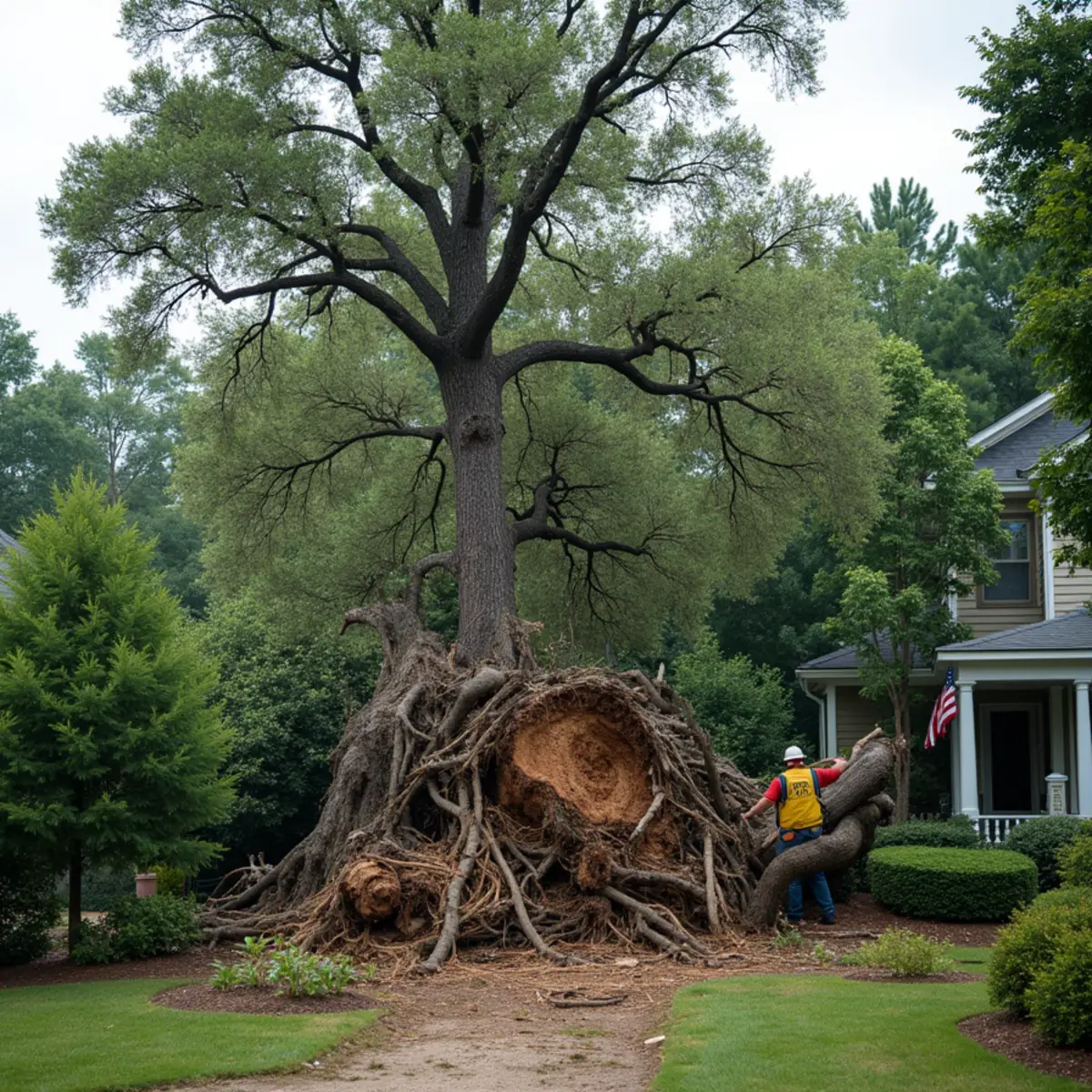
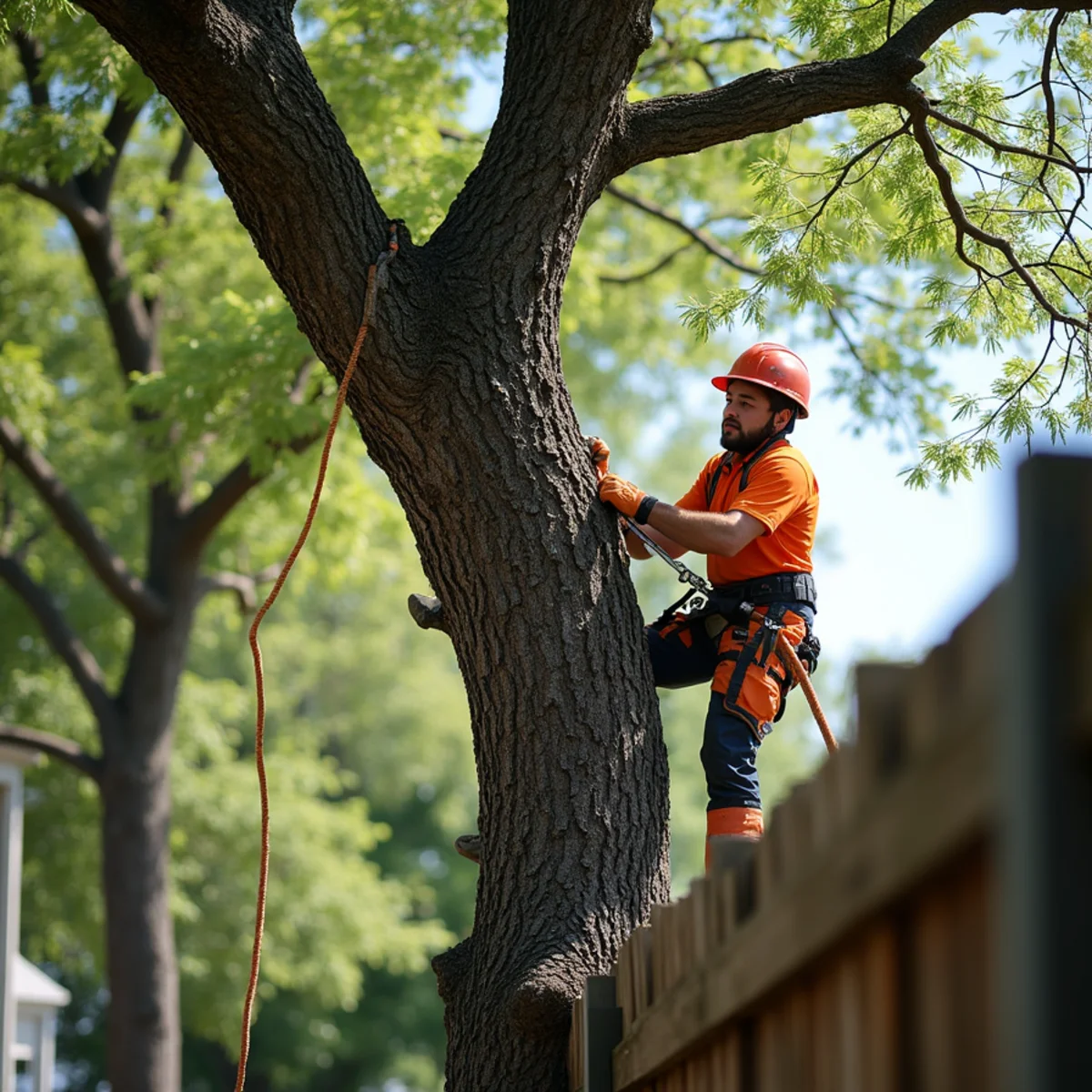
Reference photographs illustrating the key stages, biological indicators, and field equipment discussed in this article.
Need Help With a Dangerous or Fallen Tree?
Call Cabarrus Tree Crew at (321) 478-0689. Our insured local teams answer 24 hours a day, 7 days a week.
Frequently Asked Questions
Can I cut a fallen tree off my fence line right at the property boundary?▾
Who pays for the crushed boundary fence if it sits directly on the property line?▾
Will my homeowners insurance sue my neighbor's insurance company to recover my deductible?▾
Can my neighbor force me to clean up the tree if it was my tree that fell on their yard?▾
Request an On-Site Tree Estimate
For immediate emergencies (tree on house, car, or blocked road), please call directly for fastest dispatch.