
Tree on a Power Line in Concord or Kannapolis: Who to Call First
A tree touching a power line is an active electrical emergency. Learn the exact phone numbers for Concord Electric, Duke Energy, and Union Power, and why private tree crews cannot cut until lines are cleared.
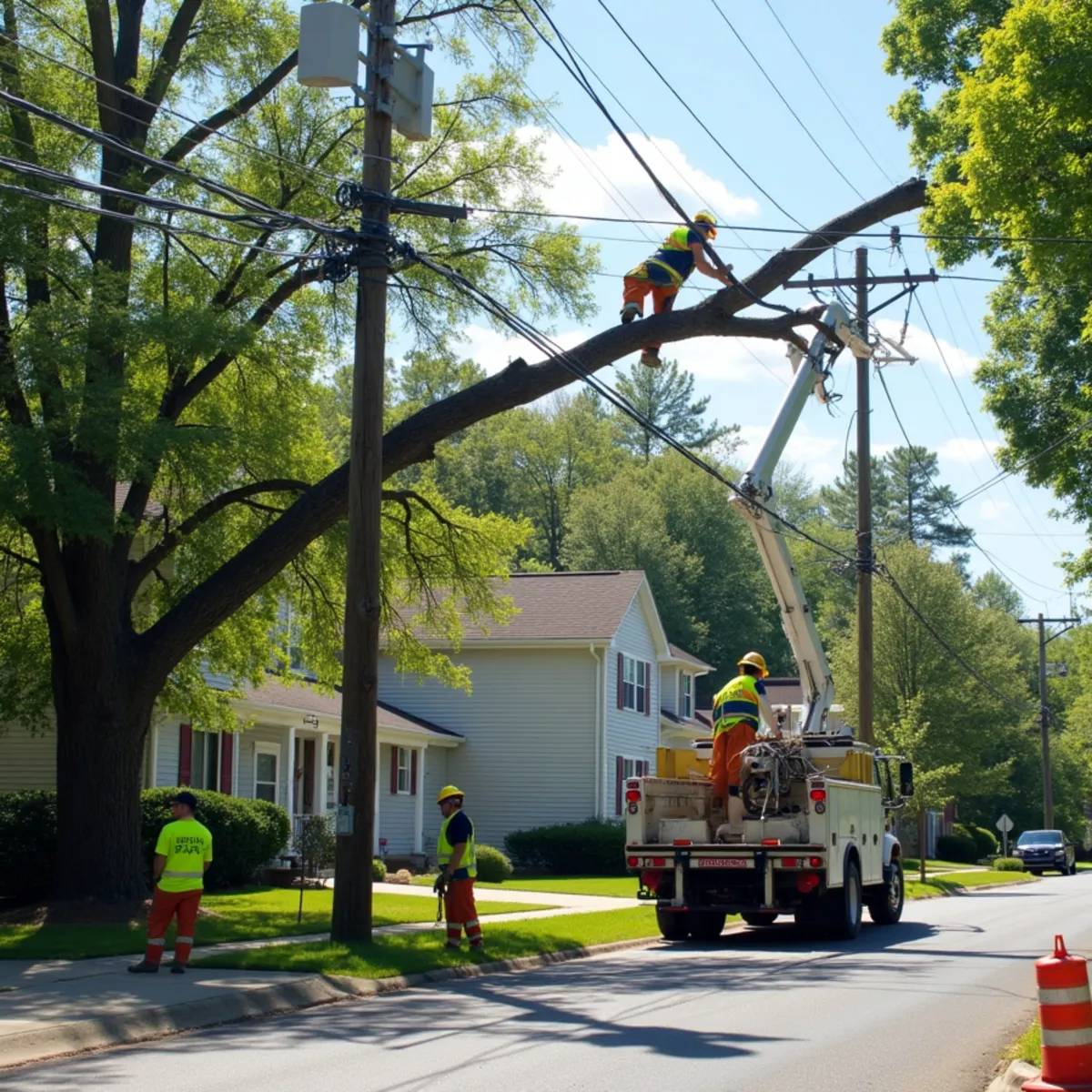
During severe Piedmont thunderstorms, microbursts, and winter ice accumulation across Cabarrus County, tree limbs crashing into overhead wires are among the most dangerous emergencies homeowners face. Whether it is a snapped pine limb dangling across a high-voltage street wire or a willow oak branch weighing down the service drop feeding your home, an electrified tree is an immediate, life-threatening hazard.
Understanding who has legal jurisdiction over specific overhead wires, how electricity behaves through living timber, and how private tree crews coordinate with utility linemen ensures your family's safety and speeds up property restoration.
---
Critical Electrical Hazards: Step Potential, Touch Potential, and Conductive Sap
Many homeowners mistakenly assume that because a fallen tree is not actively sparking, smoking, or buzzing, the power line is dead and safe to approach. This assumption is frequently fatal.
Living trees are composed of dense vascular tissue saturated with moisture, minerals, and sap—making them highly efficient electrical conductors. Here are the critical physics every homeowner must understand:
1. Automated Grid Reclosers: Modern electrical distribution systems use automatic reclosing breakers. If a falling limb creates a fault, the grid may trip off and automatically attempt to re-energize the circuit two, three, or four times over several minutes. A quiet, dark line can surge back to 7,200+ volts without warning. 2. Ground Gradient & Step Potential: When a high-voltage conductor contacts the ground or an electrified tree touches moist Piedmont red clay, thousands of volts enter the earth. Voltage dissipates outward in concentric circular waves. If a person walks near the impact zone, the voltage difference between their feet (one foot closer to the source than the other) creates step potential, driving lethal electrical current up one leg and down through the other. 3. Touch Potential: If an energized wire contacts an overhead branch that in turn touches a metal chain-link fence, copper gutter, or aluminum siding, the entire metallic envelope of your property can carry full line voltage hundreds of feet away from the initial strike. 4. Safety Perimeter Rule: Always maintain a minimum safety buffer of at least 35 to 50 feet (roughly two bus lengths) from any downed wire, sagging line, or tree in contact with electrical infrastructure. Keep children and pets indoors.
---
Cabarrus County Utility Providers & Wire Responsibility Breakdown
Before picking up the phone, identify which electrical utility serves your specific address. In Cabarrus County, electrical distribution is divided among three major providers:
| Utility Provider | Service Territory | Emergency Outage Hotline | Debris Clearance Policy | |---|---|---|---| | City of Concord Electric | Concord municipal limits & immediate utility borders | (704) 920-5555 | Clears tree limbs off conductors; leaves logs on customer parcel | | Duke Energy | Kannapolis, Harrisburg, suburban Cabarrus corridors | 1-800-769-3766 (or text OUT to 57801) | Restores power & drops lines; timber removal is customer responsibility | | Union Power Cooperative | Southern/Eastern Cabarrus, Midland, Stanly borders | 1-800-794-4423 | Clears line clearance corridor; leaves wood staged on-site |
#
Wire Type Identification & Demarcation
Not every wire attached to a utility pole carries high voltage. Overhead utility corridors typically feature three distinct tiers of wiring:
| Wire Classification | Typical Position on Pole | Operating Voltage | Hazard Level | Contractor Protocol | |---|---|---|---|---| | Primary Distribution Lines | Highest crossarms / topmost insulators | 7,200 to 24,900 Volts | Extreme / Lethal | Utility linemen only; private tree crews strictly prohibited | | Secondary Service Drop | Mid-pole running directly to home weatherhead | 120 / 240 Volts | Severe / Shock / Fire | Utility must disconnect meter or drop before contractor cutting | | Telecommunications / Cable | Lowest level on pole (thick black bundles) | 0 to 48 Volts (Data) | Low shock; physical tension hazard | Private tree crews can clear once power clearance verified |
---
The Service Drop Dilemma: Who Owns the Line to Your House?
One of the most common points of confusion in Concord involves the triplex service drop—the overhead wire spanning from the neighborhood utility pole to the weatherhead and electric meter on the side of your house.
- The Utility's Responsibility: The utility company owns the wire from the pole up to the connection crimp at your house's weatherhead. If a tree branch rips down this wire or pulls the meter base off the exterior wall, the utility will disconnect power at the pole for safety. However, they will not repair the homeowner's mast head or meter box. - The Homeowner's Responsibility: The metal mast conduit, weatherhead, meter base socket, and main electrical panel belong entirely to the property owner. If a falling limb crushes your weatherhead, you must hire a licensed North Carolina electrical contractor to install a new mast and meter socket before the utility will re-attach the service drop and restore power.
---
OSHA Standards: Why Private Tree Crews Cannot Cut Active Lines
Homeowners often ask: 'Why can't your tree service just come cut the branch off the wire right now?'
Under federal OSHA Standard 1910.269 and ANSI Z133 safety standards, private tree workers are legally prohibited from performing tree trimming or removal within 10 feet of energized high-voltage lines unless they are specifically certified Line Clearance Tree Trimmers operating under contract with the electric utility.
Attempting to cut an energized limb with a gas-powered or battery chainsaw introduces severe electrocution risks: - The carbon fibers in modern arborist ropes can conduct high-voltage electricity. - The moisture channel inside a chainsaw guide bar creates an immediate bridge to the operator's hands. - Cutting a branch under electrical tension can snap the wire, causing it to whip unpredictably and strike personnel on the ground.
---
The Coordinated 4-Step Recovery Process
Restoring your property after a tree strikes a power line requires seamless coordination between utility linemen, private tree crews, and licensed electricians:
1. Step 1: Utility Dispatch & Line Isolation: You call City of Concord Electric, Duke Energy, or Union Power. Linemen arrive, test the line, de-energize the circuit, and install mechanical grounding clamps to ensure the wire cannot become re-energized. 2. Step 2: Emergency Line De-Tensioning: Linemen make necessary rough cuts to free the wires, pull down tangled brush, repair or replace broken crossarms, and re-string damaged conductors. 3. Step 3: Private Tree Crew Extraction: Once the utility issues official all-clear clearance, Cabarrus Tree Crew mobilizes our heavy bucket trucks, knuckleboom cranes, and commercial brush chippers. We safely rig, dismantle, and remove the remaining tree trunk, heavy wood logs, and root ball from your roof, lawn, or driveway. 4. Step 4: Weatherhead Repair & Meter Re-Connection: If your service mast was damaged, our team coordinates with your electrician. Once the electrician completes the repair, the municipal inspector approves the hookup, and the utility turns your power back on.
If a tree has compromised power lines or damaged your home in Concord, Kannapolis, Harrisburg, or Midland, call Cabarrus Tree Crew at (321) 478-0689 for expert storm damage staging, crane extraction, and comprehensive property clearance once utilities are made safe.
Field Evidence & Visual Guide
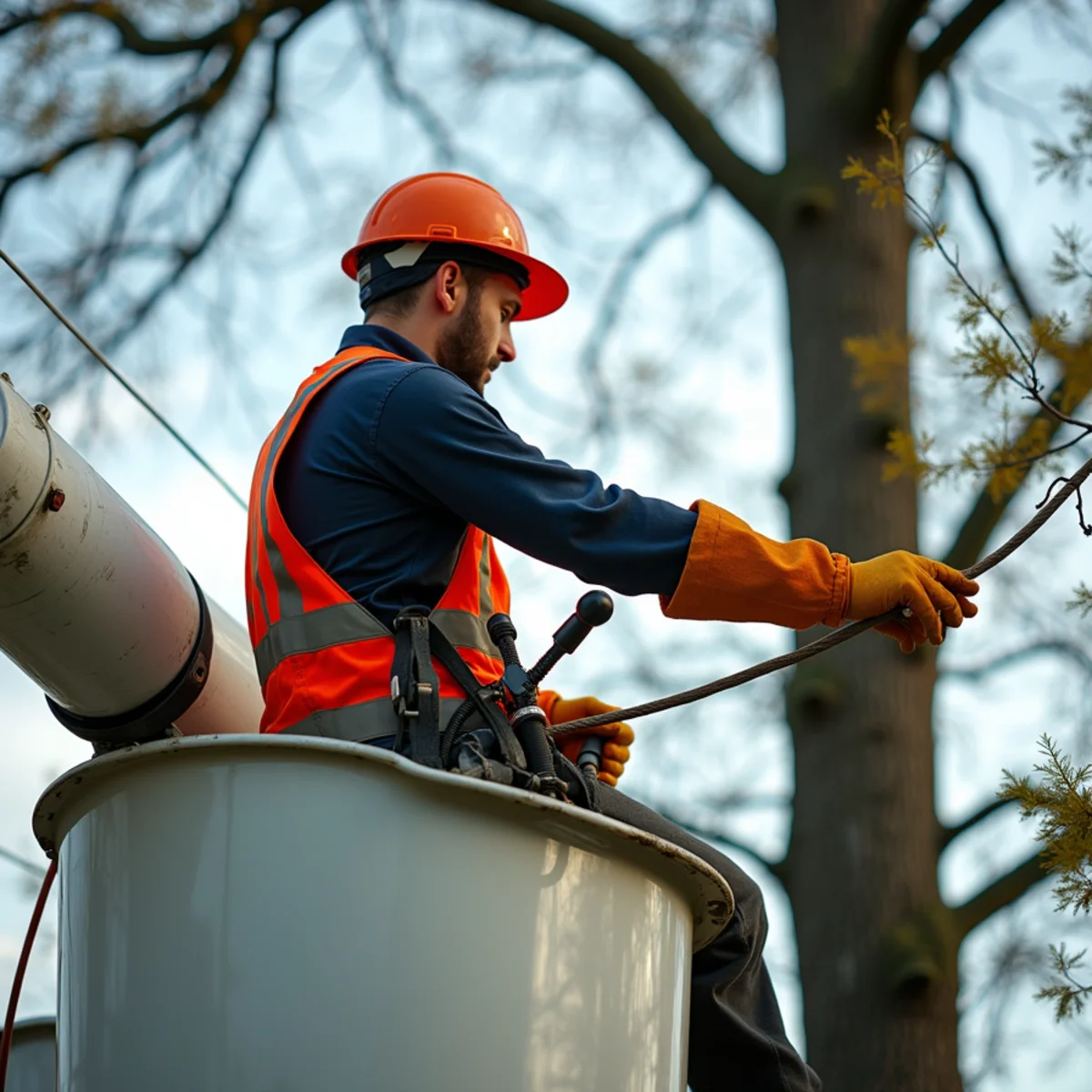
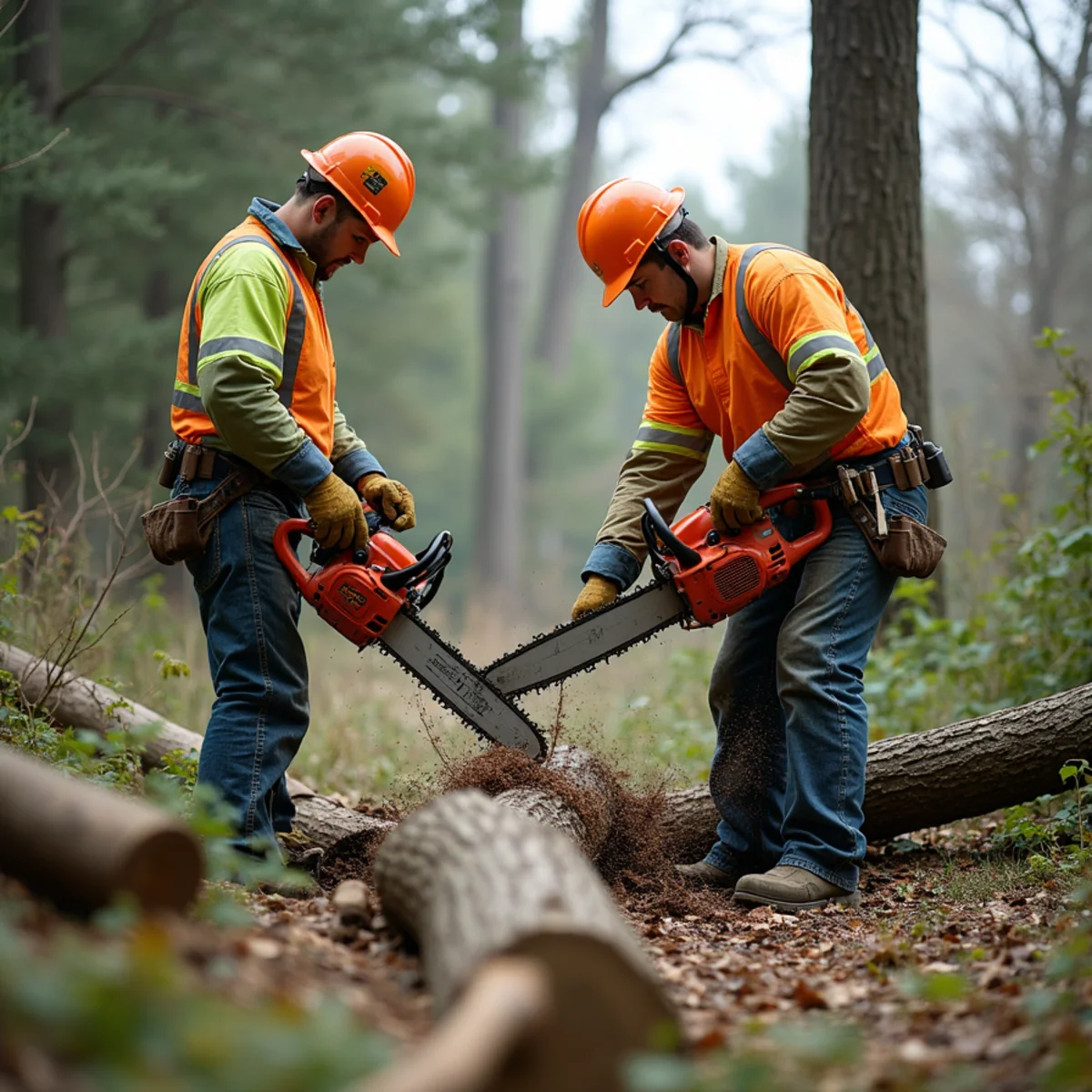
Reference photographs illustrating the key stages, biological indicators, and field equipment discussed in this article.
Need Help With a Dangerous or Fallen Tree?
Call Cabarrus Tree Crew at (321) 478-0689. Our insured local teams answer 24 hours a day, 7 days a week.
Frequently Asked Questions
Can I cut a tree limb touching the wire that runs from the pole to my house?▾
Will the electric utility company clean up and haul away the fallen tree wood?▾
How far should I stay away from a downed power line in wet grass?▾
What should I do if a power line falls on my car while I am inside it?▾
Request an On-Site Tree Estimate
For immediate emergencies (tree on house, car, or blocked road), please call directly for fastest dispatch.